Every year, from mid-autumn in Mexico, preparations begin for one of the largest and brightest holidays in the country - Day of the Dead (Spanish: El Día de Muertos).
The tradition of celebrating the Day of the Dead is rooted in the pagan beliefs of the indigenous peoples of Mesoamerica - the Aztecs and Mayans. On November 1, Mexico celebrates Día de los Angelitos (Day of the Little Angels), in honor of deceased children, and November 2 is the Day of the Dead, during which the adult generation is remembered.
For the entire period of celebration, altars are built in houses - “ofrendas” with the things of the deceased that were dear to them during their lifetime. Basic elements: photographs of the dead, cross, marigold flowers (cempasúchil), candles, pan de muerto (Day of the Dead bread), sugar skulls (calaveras de azúcar), papel picado garlands, water, copal incense, and alcohol.
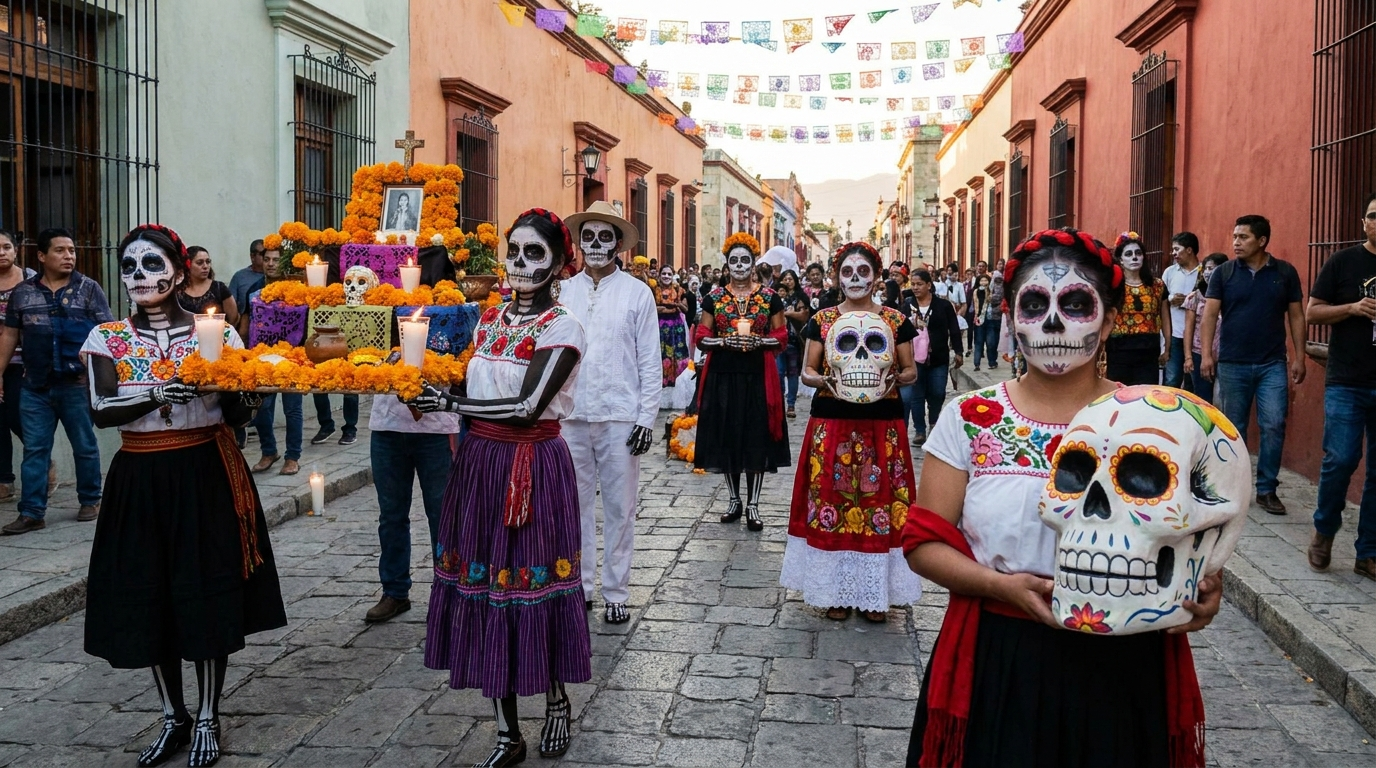
In 2008, UNESCO inscribed the “Indigenous festivity dedicated to the dead” on its Representative List of the Intangible Cultural Heritage of Humanity, recognizing Día de Muertos as a living tradition that blends pre-Hispanic Mesoamerican beliefs with Catholic influences brought during the colonial era. This recognition helped drive the tradition’s global visibility, and today the celebration is observed by Mexican diaspora communities across the United States, Europe, and beyond.


